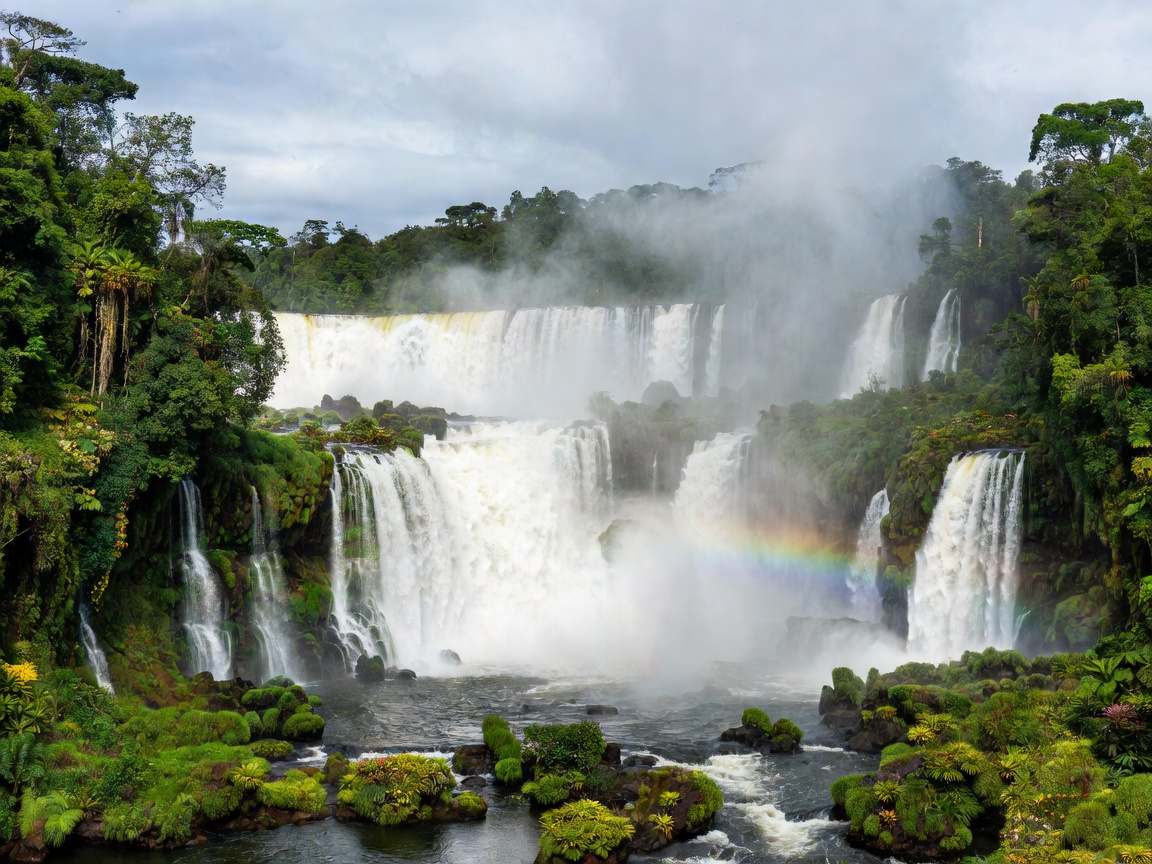
The Anatomy of Garganta del Diablo
The crown jewel of the complex is the Garganta del Diablo (The Devil's Throat)—a U-shaped chasm measuring 82 meters high, 150 meters wide, and 700 meters long. As the Iguazú River cascades over the basalt edge, it generates perpetual columns of mist that rise hundreds of feet into the air, creating continuous rainbow formations visible for miles.
The falls are split across two national parks: Parque Nacional Iguazú in Argentina (accounting for roughly 80% of the falls' physical footprint) and Parque Nacional do Iguaçu in Brazil (which delivers panoramic, sweeping perspectives of the entire geological canyon).
Comparing Argentina vs Brazil Experience
🇦🇷 Argentine Side (Immersive Depth)
Footprint: 80% of falls, requires a full day (6–8 hours).
Key Trails: Garganta del Diablo 1.1 km elevated catwalk over the wide river, the Upper Circuit (walking atop the precipice), and Lower Circuit (immersed near water spray level).
Advantage: You stand directly inches above the abyss where water crashes down.
🇧🇷 Brazilian Side (Panoramic Vistas)
Footprint: 20% of falls, requires a half day (3–4 hours).
Key Trails: Single 1.2 km riverside cliff walk that culminates in a catwalk extended right into the spray basin of the Devil's Throat.
Advantage: Comprehensive postcard views capturing all 275 waterfalls simultaneously.
Rainforest Wildlife & Ecological Fragility
The Atlantic Forest surrounding Iguazú is one of the most biodiverse, yet critically threatened biomes on Earth. During your walk along the catwalks, look for:
- South American Coatis (Nasua nasua): Highly intelligent, ring-tailed procyonids roaming the trails. Warning: Never feed or pet them, as they have sharp claws and food begging disrupts natural foraging.
- Great Dusky Swifts (Cypseloides senex): Unique birds that nest directly on vertical rock cliffs behind the thundering water curtains, plunging at high speeds through the cascades.
- Toucans and Parrots: Toco toucans with orange beaks frequent the cecropia trees above the catwalks in early morning.
- Jaguar (Panthera onca): Rare and protected apex predators monitored by camera traps throughout the deeper park backcountry.
Field Strategy: Beating Crowds & Water Flow Dynamics
Flow volume fluctuates substantially across the year. The rainy summer months (December to February) yield maximum water volume and dramatic spray, though trails can occasionally be closed during rare extreme flood events. The dry winter months (June to August) bring crisp skies, lower humidity, and crystal-clear vantage points.
To avoid tour bus congestion at the Argentine Devil's Throat catwalk, take the first Ecological Jungle Train departing at 8:30 AM from the Central Station directly to Garganta Station.